
Your rankings may look stable. Your traffic may not.
That disconnect is becoming one of the most common problems in search. Business owners are still investing in content, technical SEO, and site improvements, then watching fewer people arrive on the website. The old assumption was simple: rank higher, earn more clicks. That assumption no longer holds.
Search behavior has changed faster than most reporting dashboards. Customers now ask full questions in Google, ChatGPT, Perplexity, Claude, and voice assistants. They often get an answer immediately, form an opinion, and move on without ever opening a webpage. If your brand isn’t included in that answer layer, strong rankings alone won’t protect visibility.
That’s why answer engine optimization matters. It’s not just a technical extension of SEO. It’s a business strategy for staying discoverable when AI systems decide which brands to cite, summarize, and recommend.
The End of the Click and the Rise of the Answer
A lot of companies are in the same spot right now. They’re still showing up in search results, but that visibility is producing less website traffic than it used to. The rankings report says things are fine. Revenue teams feel something is off.
The problem is that most search reporting still measures the old battlefield. Traditional tools track keyword positions and click performance. They rarely show whether your brand is being cited in AI-generated summaries or included in LLM responses. That blind spot leaves many businesses overconfident in SEO performance while missing where customers get answers. A useful primer on Answer Engine Optimization from Sight AI helps frame why citation visibility has become a separate discipline from classic ranking work.
Rankings still matter, but they no longer tell the whole story
A page can rank well and still lose business impact if the answer is extracted before the click happens.
That changes how leaders should think about digital visibility:
- Keyword reports are incomplete: They show where you rank, not whether AI systems mention your brand.
- Competitor analysis is outdated: Many teams still compare title tags, backlinks, and SERP positions while ignoring AI summaries and conversational recommendations.
- Content value has shifted: A page now needs to do more than attract a click. It needs to be understandable enough for machines to quote accurately.
Your real competitors aren’t just the sites above you in search results. They’re the sources AI systems trust enough to cite.
For companies adapting to zero-click behavior, this shift is closely related to the broader challenge of optimizing for zero-click searches. The practical implication is straightforward. Being present in search results is no longer the same as being present in the customer journey.
Citation is the new visibility benchmark
Business owners don’t need to become LLM engineers to act on this. They do need to recognize that search has become an answer interface.
That means your brand has to earn selection, not just placement. AI systems look for clear answers, strong authority signals, machine-readable structure, and evidence that your business is a trustworthy source. If you’re not building for those signals, you’re leaving visibility to competitors whose content is easier to extract and reuse.
The Great Shift From Clicks to Citations
Search used to work like a directory. A user typed a query, scanned a list of blue links, and chose where to go. Today, search increasingly works like a concierge. The platform reads multiple sources, assembles an answer, and presents the result directly.
That change has major commercial consequences. As of early 2025, Google’s AI Overviews appear in 47% of desktop searches, 58% of Google searches end without a click to any website, and Gartner projects that classic web-search traffic will decline by 25% by 2026 as users shift toward AI answers, according to this analysis from Zen Sciences.
What this changes for business owners
If a user gets the answer without clicking, your pageview report won’t show the full picture. But the customer still formed an impression. They may now recognize one brand, trust one provider, or shortlist one company based on who was cited.
That’s why citation quality now matters alongside ranking quality.
A useful comparison looks like this:
| Search model | What the user does | What wins visibility |
|---|---|---|
| Traditional search | Clicks a link and visits a page | Strong rankings, compelling title tags, relevant content |
| AI-assisted search | Reads an answer generated from multiple sources | Clear source material, strong authority, extractable structure, citation readiness |
This also changes how businesses should think about off-site authority. A consistent digital footprint across business profiles, publications, and trusted mentions helps search systems connect your brand to a topic. That’s one reason local and entity signals still matter, especially for service businesses building trust through citation building services.
Why old SEO logic breaks down
In a click-based model, the goal was to earn the visit. In a citation-based model, the goal is to become the source behind the answer.
Those aren’t identical tasks.
A page can perform well in traditional SEO and still underperform in AI search if it has these problems:
- The answer is buried: Long introductions delay the actual response.
- The structure is messy: Weak headings and inconsistent formatting make extraction harder.
- The authority is thin: The brand lacks clear external trust signals.
- The data is ambiguous: Search systems have to guess what the page is about.
The best mental model is this. AI search behaves like a concierge who recommends businesses based on reputation and clarity. If your information is hard to verify or hard to extract, the concierge moves on.
The companies that adjust early aren’t just chasing a new acronym. They’re adapting to a new distribution layer where visibility depends on being selected for the answer itself.
The Four Pillars of Modern AI Visibility
Most businesses make one of two mistakes with answer engine optimization. They either treat it like a schema-only project, or they treat it like a content-only project. Both approaches are too narrow.
AI visibility comes from an integrated system. Four pillars matter most.
Brand authority
AI systems need confidence in who is speaking.
That goes beyond backlinks. They look for signs that a business is real, established, and consistently associated with a topic. Strong authority comes from a coherent brand footprint across your website, business profiles, publisher mentions, expert bios, service pages, and supporting references.
For business owners, this creates a practical standard. If a stranger reviewed your brand online, would they find a clear identity, a defined area of expertise, and consistent facts everywhere they looked?
What doesn’t work is trying to manufacture authority with generic blog volume. Thin articles written only to target keyword variants often add noise without building trust.
Precise content signals
Many teams need to rewrite content rather than merely publishing it.
Answer engines preferentially cite information from the first 40 to 200 words of a content piece, which is why answer-first formatting creates a measurable citation advantage, according to Marketing Illumination. If your core answer starts halfway down the page, you’ve made extraction harder than it needs to be.
Practical content rules include:
- Lead with the answer: Put the core response near the top of the relevant section.
- Use question-shaped headings: H2s and H3s should reflect real customer prompts.
- Write standalone sections: Each section should make sense without relying on a long setup.
- Add original perspective: AI systems don’t need another recycled overview. They need useful distinctions, clear examples, and differentiated information.
One of the best ways to approach this shift is through work focused on SEO for generative AI search, where content structure matters as much as topical relevance.
A short visual overview helps clarify how these moving parts fit together.
Structured data translation
Humans can infer context from design and prose. Machines prefer explicit labels.
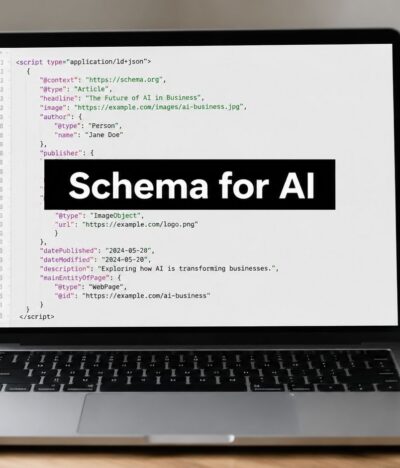
Structured data tells search systems what a page element is. Not what it might be. Not what they should infer. What it is. That can include an article, product, organization, FAQ, review, service, or location detail.
When teams skip this layer, they create unnecessary ambiguity.
Technical readiness
The final pillar is operational. Even strong content and solid authority can underperform if the site itself creates friction.
Technical readiness includes:
- Clean crawl paths: Important pages should be easy to access and interpret.
- Stable content rendering: Key information shouldn’t depend on fragile presentation layers.
- Logical page hierarchy: Related topics should connect in ways that reinforce meaning.
- Consistent entity details: Brand names, locations, services, and author information should match across the site.
Practical rule: If your site makes humans work to find the answer, it probably makes machines work even harder.
Businesses that take all four pillars seriously build something more durable than a temporary ranking lift. They build a digital footprint that AI systems can trust, interpret, and cite.
Building Your Technical Foundation with Structured Data
Structured data makes answer engine optimization tangible.
The easiest way to think about it is a warehouse system. If you leave boxes unmarked, a robotic assistant has to guess what each one contains. If you label every box clearly, the assistant can route, retrieve, and organize inventory with confidence. Your website works the same way for AI crawlers.
Why schema matters now
JSON-LD schema markup acts as a direct data bridge to AI crawlers, helping them map relationships between data points without guesswork. Research cited by Contentstack notes that implementing schema, especially FAQPage, Article, and Product, directly correlates with higher citation frequency in AI-generated answers.
That matters because AI systems don’t want to infer basic facts from cluttered page elements if they can avoid it. They prefer explicit, machine-readable context.
Here’s the practical difference:
| Without structured data | With structured data |
|---|---|
| The system tries to infer what the page contains | The page declares what the content represents |
| Important facts may be misread or missed | Entities and relationships are easier to identify |
| Citation eligibility is weaker in competitive spaces | Extraction and attribution become more reliable |
For a business owner, the takeaway is simple. Schema isn’t cosmetic. It’s translation.
Which schema types usually matter most
Not every page needs every markup type. That approach often creates clutter and implementation errors. The useful question is whether the schema accurately reflects the purpose of the page.
Common high-impact examples include:
- FAQPage: Best for pages that answer clear customer questions in a direct format.
- Article: Helps define editorial content, authorship, and publication context.
- Product: Useful for ecommerce pages where features, descriptions, and commercial details need clear labeling.
- LocalBusiness: Valuable for service brands that need consistent identity and location signals.
If your team needs a clearer primer on the topic, this guide on what structured data is in SEO is a useful starting point.
What businesses often get wrong
The most common mistake is treating schema as a plugin checkbox instead of a content strategy layer.
A few practical cautions matter:
- Don’t mark up weak content: Schema helps define information. It doesn’t improve poor answers.
- Don’t use irrelevant types: Mislabeling pages creates confusion instead of clarity.
- Don’t ignore consistency: Your schema should match visible on-page facts.
- Don’t stop at one template: Service pages, articles, FAQs, and product pages often need different handling.
Schema works best when it reflects reality with precision. It fails when teams use it as decoration.
Businesses that adopt structured data well usually find that it improves more than AI visibility. It also forces cleaner content architecture, stronger page intent, and better coordination between marketing and development.
Your Practical AEO Roadmap for Sustainable Growth
Answer engine optimization feels abstract until you turn it into a phased operating plan. That’s where most businesses regain momentum. The work becomes manageable once it’s broken into sequencing, ownership, and trade-offs.
Early adopters are already seeing measurable gains. According to TNG Shopper, companies investing in AEO are seeing 3.4x more answer engine traffic than slower-moving competitors and 27% higher conversion rates from that traffic. The same source recommends a budget split of 40% for entity and schema optimization, 30% for citation equity, 20% for content operations, and 10% for auditing.
Phase 1 audit your actual AI visibility
Start by testing your presence in the places customers now ask questions.
Use your core commercial queries and compare:
- Brand prompts: Does the AI describe your company accurately?
- Category prompts: Are you cited when users ask for providers in your space?
- Comparison prompts: Does your brand appear in alternatives, best-of, or recommendation queries?
- Question prompts: Are your educational pages being referenced when users ask operational questions?
This is also where many brands discover they need a dedicated Google SGE content strategy, not just a traditional content calendar.
Phase 2 fix the foundation first
Don’t begin with ten new blog posts.
Fix the pages that should already be carrying authority. In most organizations, that means the homepage, key service pages, product pages, location pages, and high-intent FAQ content. Tighten page structure, front-load answers, clean up entity consistency, and implement the structured data that reflects real page purpose.
The trade-off here is speed versus order. Publishing fresh content feels productive. Fixing existing assets usually produces a stronger foundation.
Phase 3 build authority through differentiated content
Generic content won’t carry an AEO strategy.
The most effective editorial work usually does one of three things:
- Answers overlooked prompts: Questions your buyers ask in conversational language.
- Adds information gain: Angles competitors ignore, especially industry-specific or operational detail.
- Strengthens citation equity: Content that other sites, writers, and systems can reference confidently.
That’s also why off-site assets matter. A clear media mention, thought leadership article, or well-structured announcement can reinforce entity understanding. If your team uses digital PR, this guide on how to optimize a press release for SEO is a useful complement because distribution assets can support both discoverability and authority when handled correctly.
Phase 4 measure the right outcomes
AEO measurement isn’t only about sessions.
Track signs of real visibility change:
| What to monitor | Why it matters |
|---|---|
| AI brand mentions | Shows whether answer engines recognize and cite you |
| Referral traffic from AI platforms | Reveals direct downstream impact |
| Conversion quality from AI visits | Separates curiosity clicks from commercial value |
| Coverage across prompt variations | Shows whether your visibility is broad or fragile |
Teams that win in AEO usually stop asking, “Did we publish enough?” and start asking, “Did we become easier to trust and easier to cite?”
That’s the operating mindset that supports sustainable growth.
Future-Proof Your Brand with Raven SEO
Answer engine optimization is no longer a side topic for technical marketers. It’s part of how brands protect visibility as search behavior moves from links to answers.
If your reporting still focuses only on rankings and website clicks, you’re missing a growing part of the customer journey. Buyers are already using AI systems to research providers, compare options, and narrow decisions. The brands that show up in those answers build trust earlier. The brands that don’t become easier to overlook.
Raven SEO helps businesses prepare for that shift with an AI Visibility Audit built around practical findings, not buzzwords. The goal is simple. Identify where your brand appears, where it doesn’t, and what changes will improve your chances of being cited across AI Overviews, LLMs, and conversational search platforms.
That includes the strategic work most organizations need: cleaner site architecture, stronger content structure, meaningful schema implementation, and a roadmap that aligns SEO with AI discovery.
If you want a clear view of your current position and the next steps to improve it, Raven SEO offers a no-obligation consultation to start the process.
Frequently Asked Questions about AEO
Is answer engine optimization replacing traditional SEO
No. It’s extending it.
Traditional SEO still matters because crawlability, site quality, internal linking, and topical relevance remain foundational. But those basics no longer cover the full search environment. Answer engine optimization adds the layers that help AI systems interpret, trust, and cite your content.
Does AEO only matter for large national brands
No. Smaller businesses can benefit because clarity and structure often outperform size in AI retrieval.
Service companies, healthcare practices, law firms, contractors, ecommerce brands, and multi-location businesses all have opportunities to earn citations if they publish useful answers, maintain a consistent digital footprint, and implement structured data well.
How long does it take to see results from AEO
It depends on your starting point.
A business with strong authority, clean technical foundations, and well-structured content can improve visibility faster than a site with inconsistent branding and weak content architecture. In practice, the work usually unfolds in stages. Technical fixes and content restructuring can improve citation readiness first. Authority signals and broader AI visibility build over time.
What kinds of content perform best in answer engines
The strongest candidates usually share a few traits:
- Direct answers first: The page addresses the question early.
- Clear headings: Sections mirror the way users ask questions.
- Specific expertise: The content adds real detail instead of generic summaries.
- Machine-readable structure: Schema and page organization support accurate extraction.
Should we create new pages or rewrite existing ones
Usually both, but not in equal measure.
Most companies already have core pages that should be performing better than they are. Start there. Rework service pages, product pages, and FAQs so they answer questions clearly and support machine interpretation. Create new pages only when there’s a clear gap in topic coverage or prompt variation.
How should we measure success if fewer people click
Use a wider lens.
Website sessions still matter, but they don’t tell the whole story anymore. Businesses should also evaluate AI mentions, referral traffic from answer engines, brand accuracy in generated responses, and the quality of conversions coming from those channels.
Raven SEO helps brands become easier for AI systems to understand, trust, and cite. If you want a practical roadmap for answer engine optimization, structured data, and AI-ready search visibility, schedule a consultation with Raven SEO.