

Meta Title: Event Marketing Agencies for Maryland Businesses | Raven SEO
Meta Description: Learn how event marketing agencies help Maryland businesses drive local buzz, leads, and lasting digital visibility. Raven SEO shares a practical guide to choosing partners and extending event ROI through local SEO.
A lot of Maryland business owners are sitting on the same idea right now. They want to host something people will remember. A launch party in Baltimore. A customer appreciation event in Annapolis. An open house in Dundalk that brings in real prospects instead of casual walk-ins.
The problem usually isn't enthusiasm. It's execution.
Once you start thinking through permits, vendors, guest flow, registration, promotion, follow-up, and how the event ties back to sales, the whole thing can feel bigger than it looked on the whiteboard. That's where event marketing agencies become useful. The right one doesn't just make an event look polished. It helps turn a one-day experience into a business asset that keeps working after the chairs are folded and the signs come down.
Launching Your Brand Beyond the Digital Storefront
A bakery in Baltimore might want a tasting event that gets shared across neighborhood Facebook groups. A law firm in Annapolis might want an educational seminar that builds trust with local business owners. A home services company in Dundalk might want a live demo day that gives people a reason to meet the team before they ever request an estimate.
Those are all smart ideas. They only work, though, when the event has a business purpose behind it.
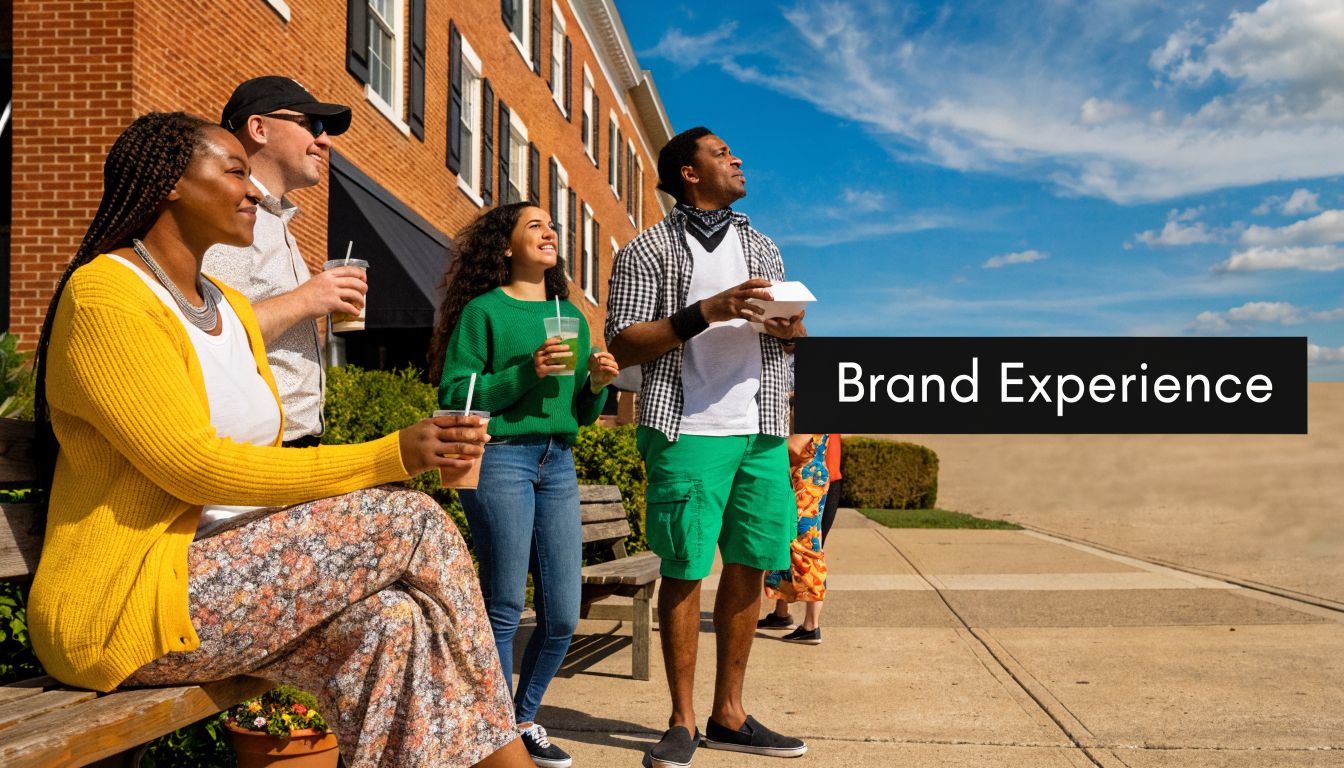
Event marketing has become a serious growth channel. 83% of marketers say events are a critical component for achieving business growth objectives, according to Bizzabo's event marketing statistics. That lines up with what many small businesses already sense. People buy faster when they've had a direct experience with your team, your product, or your atmosphere.
Practical rule: If the event doesn't support a specific business goal, it's entertainment, not marketing.
For Maryland businesses, the primary opportunity isn't just filling a room. It's creating local momentum that carries into search visibility, reviews, referrals, email engagement, and repeat business. A good event can do all of that. A poorly planned one usually burns budget and creates very little follow-through.
A strong agency relationship starts with a simple question. What do you need the event to do?
- Generate leads for a service business
- Drive foot traffic for a retail location
- Build trust for a professional practice
- Create launch awareness for a new brand or offer
- Capture usable content for social, email, and local search assets
That distinction matters because the event format, venue, registration flow, and follow-up plan should all change based on the goal.
What an Event Marketing Agency Actually Does
Most business owners hear "event agency" and think venue booking, catering, and decor. That's only part of the job. The better way to think about event marketing agencies is this: they're the architect and general contractor for a live brand experience.
They help define the event, build the plan, coordinate the moving parts, and make sure the end result supports revenue, reputation, or retention.
The category is also expanding. The global event marketing industry is projected to reach $36.31 billion by 2026, with 43% of agencies running a mix of in-person and virtual events and 30% specializing in in-person formats, according to Exploding Topics event marketing data. That shift reflects what clients now expect. They don't just want a room and a run-of-show. They want strategy, content, audience targeting, and measurement.
Strategy comes first
A competent agency starts with positioning, not logistics.
That means asking questions like:
- Who should attend?
- What should they think, feel, or do afterward?
- Is this a lead generation event, a loyalty event, or a launch event?
- What offer or message should anchor the experience?
If an agency jumps straight to themes and swag without diagnosing the business objective, that's a warning sign.
A beautiful event can still fail if the guest list is wrong, the offer is weak, or the follow-up is missing.
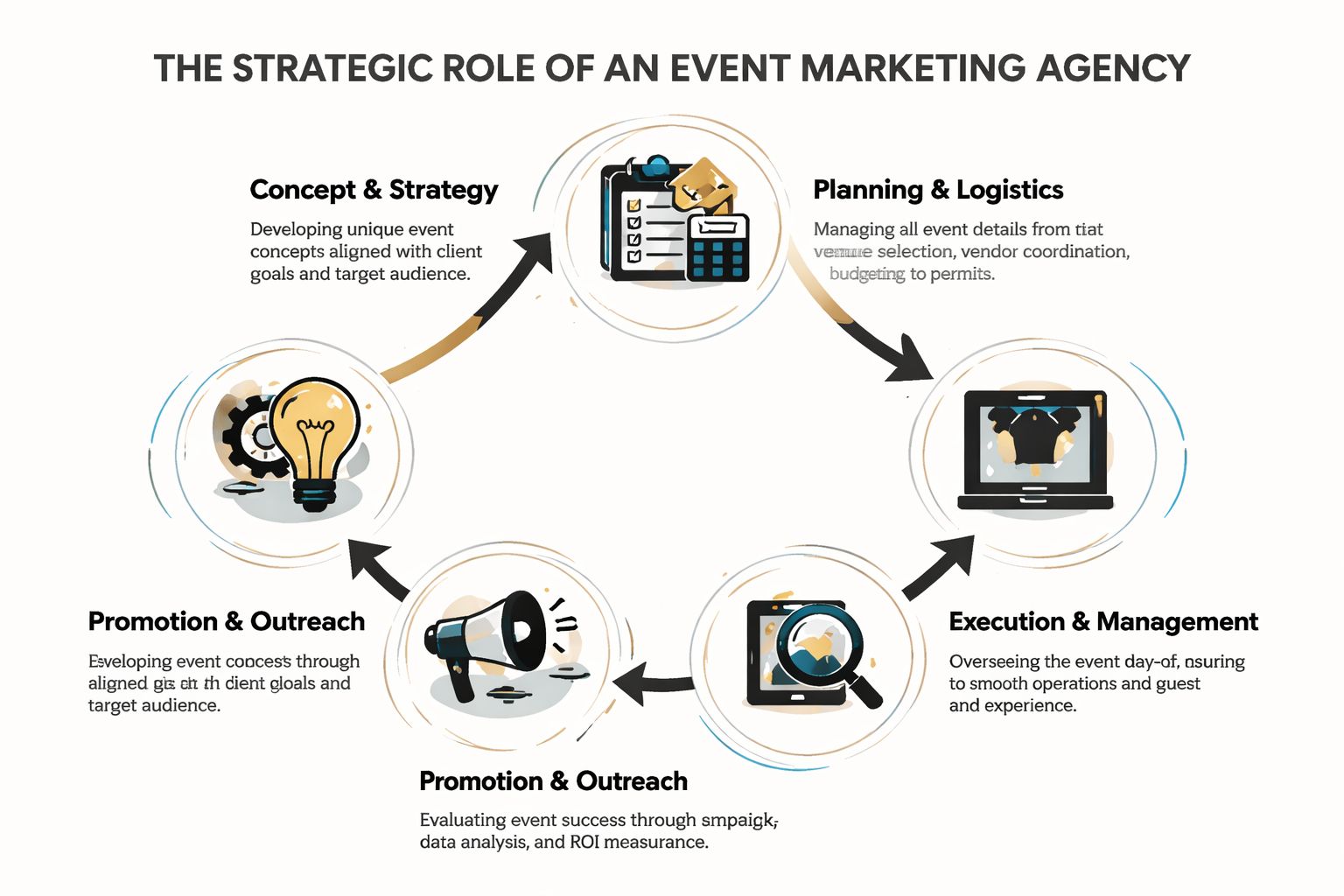
The work usually spans five operating lanes
Some agencies package these together. Others split them into planning, creative, and promotional scopes. Either way, the work typically includes:
- Concept development: Theme, format, audience fit, and event positioning.
- Operations: Venue sourcing, staffing, permits, insurance coordination, timelines, rentals, A/V, and vendor management.
- Promotion: Email campaigns, landing pages, paid social, local partnerships, RSVP management, and reminder sequences.
- On-site execution: Check-in flow, signage, programming, guest experience, troubleshooting, and schedule control.
- Post-event analysis: Lead handling, content reuse, CRM updates, recap reporting, and lessons for the next activation.
They also protect you from common mistakes
Small businesses often underestimate what breaks an event. It isn't always the big dramatic failure. More often it's a series of avoidable misses.
| What works | What doesn't |
|---|---|
| Clear attendee targeting | Inviting everyone and hoping the right people show up |
| Defined owner for every task | Shared responsibility with no decision-maker |
| Strong registration process | A basic form with no segmentation or follow-up |
| Vendor contingency plans | Assuming every supplier will deliver flawlessly |
| Post-event lead workflow | Letting business cards sit in a bag for a week |
That's the same reason many businesses compare outside support against internal bandwidth in other channels too. The trade-offs in staffing, specialization, and accountability aren't unique to events. They're similar to the questions covered in Raven SEO's guide to in-house vs agency marketing.
The best agencies think past event day
A strong partner asks what happens after the applause. Are attendees moving into a sales pipeline? Are photos being turned into local landing page content? Are reviews being requested? Are warm prospects receiving a relevant next step?
Those details are where event marketing stops being a line item and starts becoming part of the growth system.
How to Evaluate Agencies in the Baltimore-Annapolis Corridor
Choosing an agency isn't a style decision. It's an operations decision with brand consequences.
In this region, local knowledge matters more than many owners realize. A waterfront activation near the Inner Harbor calls for different planning instincts than a professional seminar in Annapolis or a community-centered retail event in Howard County. The audience expectations change. The vendor ecosystem changes. The pacing changes.
Corporate confidence in events remains high, and budget appetite has risen qualitatively across the market. That makes agency selection even more important because more companies are competing for attention, venues, and attendance. You don't want a team learning your market on your time.
Look for local fluency, not just a pretty portfolio
A polished gallery can hide a lot. Ask what the agency has executed in settings comparable to yours.
You want specifics:
- Venue familiarity: Have they worked with spaces that fit your audience and budget?
- Vendor depth: Do they already know reliable caterers, A/V teams, printers, photographers, and staffing partners in Central Maryland?
- Permit awareness: Can they explain what changes when an event moves outdoors, onto public property, or into a regulated environment?
- Neighborhood fit: Do they understand the difference between a Fells Point consumer crowd and an Annapolis professional audience?
An agency doesn't need to be headquartered down the street. It does need to show that it can operate confidently in your market.
Hiring advice: Ask an agency what could go wrong at your event type in your location. The strongest teams answer fast and specifically.
Ask better questions in the sales process
Most owners ask, "What's your price?" too early.
A better set of questions reveals whether the agency thinks strategically or just sells packages.
How do you define success for an event like ours?
If they only talk about attendance, keep probing.What would you need from our team each week?
This reveals whether they have a real workflow or a vague promise.How do you handle attendee data and follow-up?
If they stop at check-in, the job is incomplete.Who owns vendors and who owns day-of decisions?
You need clarity before stress hits.What types of events should we not do?
Smart agencies know when a format is a bad fit.
Compare agencies like you would any growth partner
If you've ever looked at evaluating local ecommerce partners, the same principle applies here. Don't just compare deliverables. Compare judgment, communication style, process maturity, and whether the partner understands how your business makes money.
A simple scorecard helps. Use one before you make a decision.
| Evaluation area | What to look for |
|---|---|
| Business alignment | They understand your margin, sales cycle, and customer type |
| Local execution ability | They know venues, vendors, and audience behavior in the corridor |
| Promotion capability | They can drive attendance, not just produce the event |
| Measurement discipline | They talk about tracking, lead handling, and reporting |
| Communication | Response time, ownership, and decision clarity are strong |
Watch for pricing traps
Event marketing agencies usually price work in one of three ways:
- Project fee: Best for a clearly defined one-off event
- Percentage of spend: Common on larger productions, but ask what's included
- Monthly retainer: Useful when events tie into ongoing campaigns, launches, or recurring community programming
None of those models is automatically right or wrong. Problems start when the scope is fuzzy.
Ask for a breakdown of what's included and what's likely to become an extra charge. Common gray areas include revisions, additional vendor sourcing, on-site staff hours, travel, setup changes, and post-event reporting. If the proposal feels too compressed to be realistic, it probably is.
For Maryland businesses that also need broader digital support around the event, it helps to compare event capability against a more complete local growth strategy. That's where a resource like Raven SEO's Baltimore digital marketing agency page can help frame how event activity should connect to search, content, and lead generation rather than sit in a silo.
The right agency should challenge weak ideas
If you say, "We want a big turnout," the best agency won't nod and move on. It will ask, "From whom, and why?"
That's what you want. Agreement feels good in a pitch meeting. Pushback is often more valuable.
Local Event Marketing Examples in Action
Theory gets clearer when you see how the format changes by neighborhood, audience, and business type.

Fells Point retail launch
A boutique in Fells Point wants more weekday foot traffic and stronger local word-of-mouth. A generic discount event won't do much. An agency would likely shape the night around experience, not markdowns.
A "Sip and Shop" collaboration with a local beverage partner fits the neighborhood better. The cobblestone setting already provides atmosphere. The job is to package it properly with timed invites, a photographer, a check-in list, short-form video capture, and a follow-up offer that gets guests back into the store.
What works here is texture. Guests should feel like they discovered something worth talking about. If the event feels like a clearance rack with cups, it won't travel socially or conversationally.
Towson B2B or startup gathering
A Towson startup trying to reach students, younger professionals, or early-stage founders may be better served by a compact networking event, product demo session, or workshop-style meetup than a formal corporate launch.
In that setting, an agency can help structure:
- a venue with natural conversation flow
- branded registration
- a speaker or panel element
- lead capture tied to interest level
- a next-step email path for demos or consultations
Operational details matter here too. Something as practical as guest connectivity can shape the attendee experience, especially if check-in, demos, or social sharing happen on-site. Large events have shown how valuable reliable access can be, which is part of why examples like Splash Access Wi-Fi for Island Games are worth reviewing when you're thinking about infrastructure, not just promotion.
For more examples of how live experiences connect with broader channels, Raven SEO's integrated marketing campaign examples are useful context.
Canton wellness launch
A new fitness studio in Canton doesn't need a flashy grand opening. It needs local trust and community buy-in.
That changes the event design. A "Wellness on the Waterfront" concept with short classes, partner tables, healthy samples, and easy photo moments fits the area and the category. The agency's job is to orchestrate the pieces so attendees meet instructors, interact with the space, and leave with a reason to book a first visit.
A short video can help show how event atmosphere, movement, and crowd energy influence turnout and engagement:
The event itself isn't the whole win. The agency should plan for local creators, post-event testimonial requests, class offer follow-ups, and content that keeps the studio visible after the launch weekend.
Neighborhood fit beats novelty. The best local event ideas feel native to the place and useful to the audience.
Integrating Events With Your Local SEO Strategy
This is the part many businesses miss. Event value shouldn't end when the event ends.
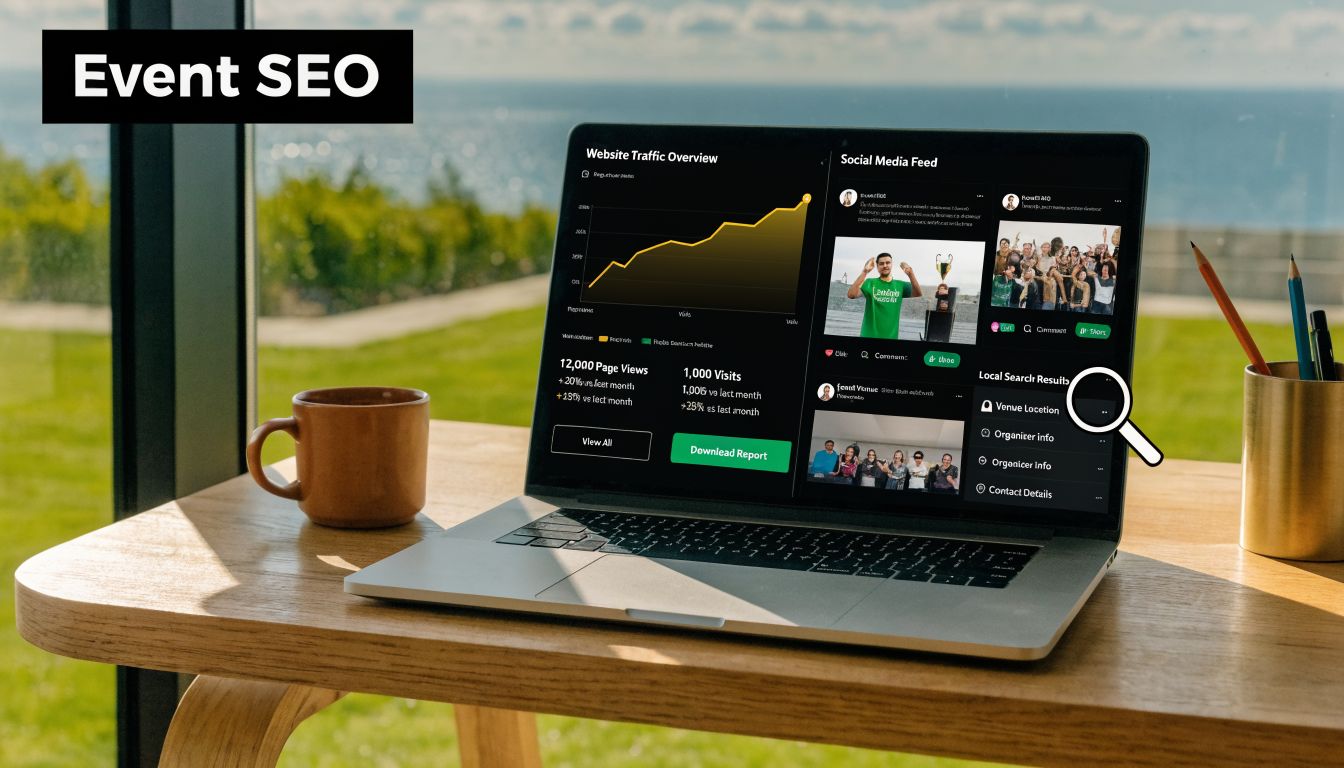
A well-run event creates signals that can strengthen local digital performance for weeks or months after the date passes. That's especially true when the business ties the event into its website, Google Business Profile, CRM, and review strategy instead of treating it like a standalone production.
Before the event
Create a dedicated landing page on your main site. That page shouldn't be a thin flyer with a date and a button. It should include the event purpose, who it's for, location details, registration, supporting visuals, and clear post-registration expectations.
If you're using WordPress or a Swyft Site, make sure the page is easy to update and built to support search visibility. Event-specific schema markup is useful because it gives search engines cleaner context about what the page represents. Local businesses often overlook this and end up promoting a temporary event with content that has no long-term utility.
Before launch, set up:
- A focused page title and meta description tied to local intent
- An RSVP or registration form that captures useful segmentation data
- UTM-tagged campaign links so traffic sources are easier to compare
- Calendar-ready details so attendees can save the event quickly
- A thank-you page that introduces the next business action
For a broader framework on structuring local search assets properly, Raven SEO's local SEO best practices are a solid reference.
During the event
Live data discipline matters more than people think.
According to The Data Business guide on turning event data into gold, top agencies that integrate event data with CRM systems can boost follow-up conversion by 15% to 25%. The same source notes that standardizing data capture can reduce manual errors from 30% to less than 5%, which makes lead scoring and timely follow-up far more reliable.
That means your event team shouldn't be collecting names three different ways and trying to sort it out later. Use one primary registration system. Keep fields consistent. Tag attendees by interest or intent while the interaction is still fresh.
On-site discipline: If your team can't tell sales-ready prospects from casual visitors by the end of the event, your follow-up will be slower and weaker.
Some practical examples:
- A med spa can tag attendees by service interest at check-in.
- A law firm can segment by business owner, investor, or referral partner.
- A home services company can note project type and service area.
- A retailer can track VIP guests, repeat buyers, and press or creator attendees.
After the event
Local SEO then picks up the baton.
Use the event to feed your digital footprint:
- Google Business Profile posts: Publish recap photos, a short event summary, or a limited-time offer tied to the event momentum.
- Review requests: Ask attendees for feedback when the experience is still recent.
- Location page content: Add images, FAQs, or event recaps that reinforce community relevance.
- Email follow-up: Send different messages based on attendee behavior, not one mass note.
- Social proof reuse: Turn photos, testimonials, and clips into assets for future campaigns.
A good local event creates branded search, photo content, review opportunities, community mentions, and stronger relevance signals. That's why the smartest businesses don't ask whether events or SEO matter more. They make each one improve the other.
Measuring Event ROI for Maryland Businesses
A packed room doesn't always mean a successful event. Plenty of busy events underperform because they attract the wrong people, collect weak data, or fail to drive the next action.
The cleaner way to judge event marketing agencies is by whether they tie execution to measurable outcomes. For one Maryland business, that may be qualified consultations booked after the event. For another, it may be direct purchases, repeat visits, or improved review volume tied to a local campaign window.
What to measure beyond attendance
Start with the business goal, then match the metric.
- Lead-focused events: Track qualified leads, appointments, and sales conversations created.
- Retail events: Watch redemptions, repeat visits, and offer-based purchases after attendance.
- Brand events: Measure review growth, content reuse, audience engagement, and referral activity.
- Partnership events: Look at introductions, follow-on meetings, and co-marketing opportunities.
According to CapturePod's experiential marketing guide, top agencies often aim for an ROI ratio greater than 4:1 and can justify 2x to 3x return on investment through social amplification and user-generated content data alone. That's a useful reminder that event value isn't limited to tickets sold or feet through the door.
The better question
Don't ask, "Did the event go well?"
Ask, "What business result did it create, and can we track it with confidence?"
That's where disciplined measurement becomes essential. If you need a stronger framework for tying campaigns back to outcomes, Raven SEO's guide to measuring return on marketing investment is a practical place to start.
If you're planning an event and want it to produce more than a busy afternoon, Raven SEO can help you connect that effort to long-term local visibility. From AI-ready web design and Swyft Sites support to local SEO and measurement strategy, Raven SEO helps Maryland businesses turn real-world marketing into sustainable digital growth.