
A lot of Maryland business owners reach the same point at the same time. The website is live, Google Business Profile is active, social posts go out, and leads still feel uneven. Then the next question lands on the desk. Should we build an app, or would a better website do the job?
For a boutique in Fells Point, that question usually means repeat visits and loyalty. For a restaurant near Towson, it means easier ordering and promotions. For a home service company in Dundalk, it often means faster scheduling, quote requests, and better follow-up. The core issue isn't whether an app sounds modern. It's whether the tool fits the way your customers already behave.
The native app vs web app decision gets clearer when you treat it like a business strategy choice instead of a tech badge. You usually have three practical routes: a native app, a web app, or a progressive web app (PWA). Each one supports a different mix of visibility, convenience, performance, and retention.
Should You Build an App for Your Maryland Business
If you're asking whether your business needs an app, start with the customer journey, not the codebase.
A salon owner in Canton doesn't need the same mobile setup as a specialty retailer in Fells Point. One may need repeat booking, reminders, and account-based loyalty. The other may need fast local discovery, product browsing, and a smooth path from Instagram or Google Search into a purchase. The right answer depends on what the customer needs to do on a phone.
Start with the job your mobile experience needs to do
Most Maryland small businesses fall into one of these patterns:
- Discovery first: Customers find you through Google, maps, or social, then need fast access to hours, services, menus, or inventory.
- Retention first: Customers already know you and need repeat ordering, appointments, account access, or loyalty rewards.
- Utility first: Customers need a tool, such as booking, route updates, membership access, or service tracking.
If your business mostly depends on search visibility and easy access, a web app or strong mobile website may be the best first move. If repeat behavior drives revenue, a native app becomes much more attractive. If you want some app-like convenience without committing to full app-store distribution, a PWA often sits in the middle.
Practical rule: Build an app only when it removes friction that your current mobile site can't remove.
Think local before you think technical
In Maryland, local context matters. Foot traffic, neighborhood behavior, tourism, commuter patterns, and repeat visits all shape the decision. A business trying to improve neighborhood visibility should also make sure its local search foundation is solid. These local SEO best practices for Maryland businesses often do more for discovery than an app alone.
The businesses that get this right don't ask, "Should we have an app?" They ask, "What mobile experience helps our customers take the next step fastest?"
Understanding Your Choices Native Web and PWAs
The easiest way to understand the native app vs web app debate is to picture three different tools in the truck.
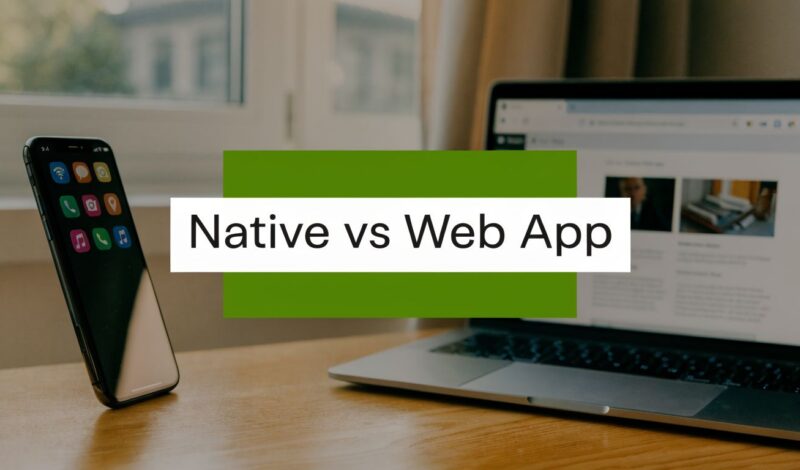
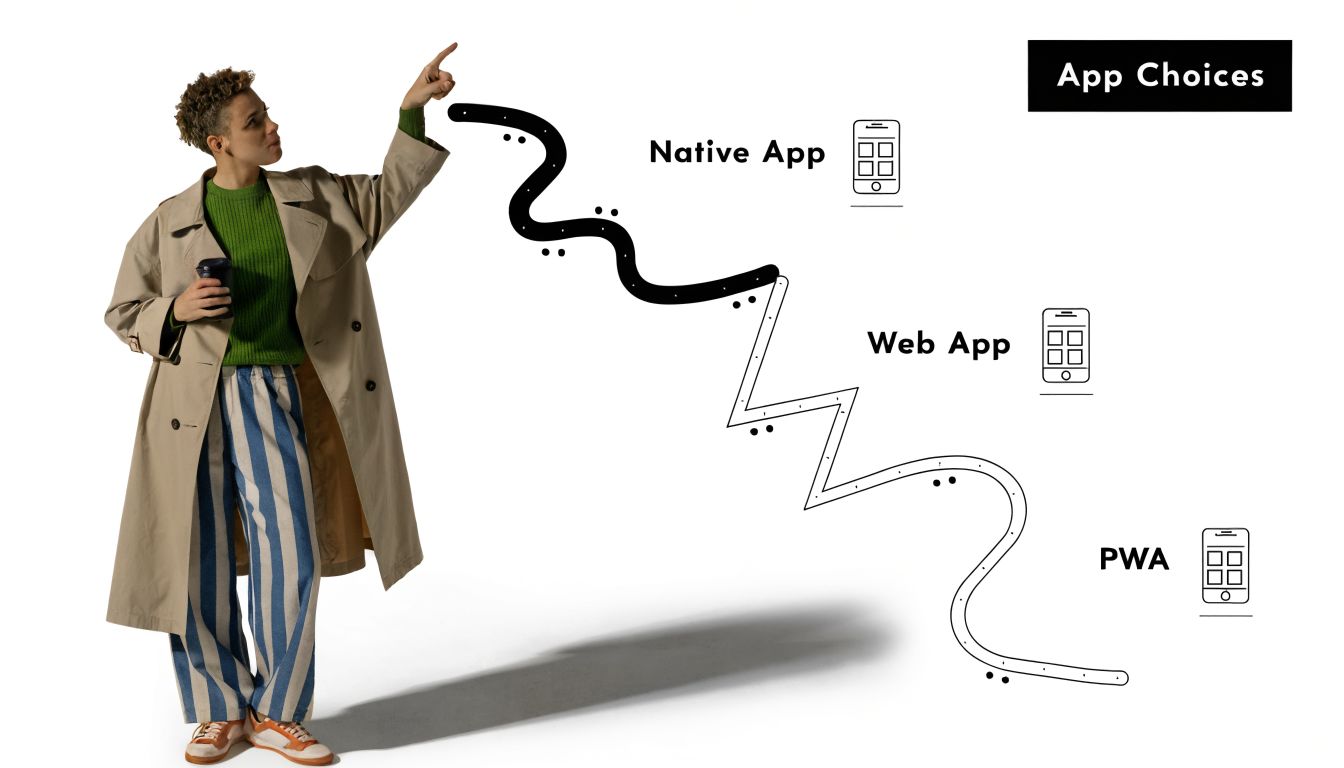
A native app is the specialized tool. It's built for a specific operating system, downloaded from an app store, and designed to work closely with the phone itself. A web app is the flexible tool you open in a browser. It doesn't require installation and can be accessed through a link. A PWA sits between the two. It's still web-based, but it can feel more like an installed app in the right setup.
What a native app feels like
Customers find native apps in the Apple App Store or Google Play, download them, and keep them on the phone.
That changes expectations immediately. Users expect smoother navigation, faster interactions, better use of the camera or GPS, and a more polished account experience. Native apps are often the best fit when your mobile product is part of the service itself, not just a marketing channel.
Examples include loyalty programs, fitness tracking, member portals, ordering systems, or tools customers open repeatedly.
What a web app feels like
A web app opens through a browser, usually from a Google result, an email link, a QR code, or a social profile.
This makes web apps easier to reach. Nobody has to install anything. A customer in Towson can search, tap, browse, and convert with very little friction. That's powerful when your business relies on discovery, first visits, and quick actions.
For owners comparing build approaches, this guide to mobile app frameworks is useful background because it shows how businesses and development teams think about platform choices before they commit.
What a PWA feels like
A progressive web app starts as a website but adds app-like behavior. Depending on the device and browser, users may be able to save it to a home screen and use selected features with less dependence on a live connection.
For many small businesses, a PWA is the practical compromise. It can support a cleaner repeat-use experience than a standard mobile site without requiring a full native rollout. If you want the larger planning context behind these choices, it helps to understand the broader stages of web development before deciding where an app should fit.
A customer doesn't care what you built. They care whether it loads quickly, is easy to use, and helps them finish the task.
Core Differences Native vs Web vs PWA
The biggest mistake in the native app vs web app conversation is treating every factor as equal. They aren't. For a Maryland business owner, four issues usually decide the matter. Performance, user experience, device access, and discoverability.
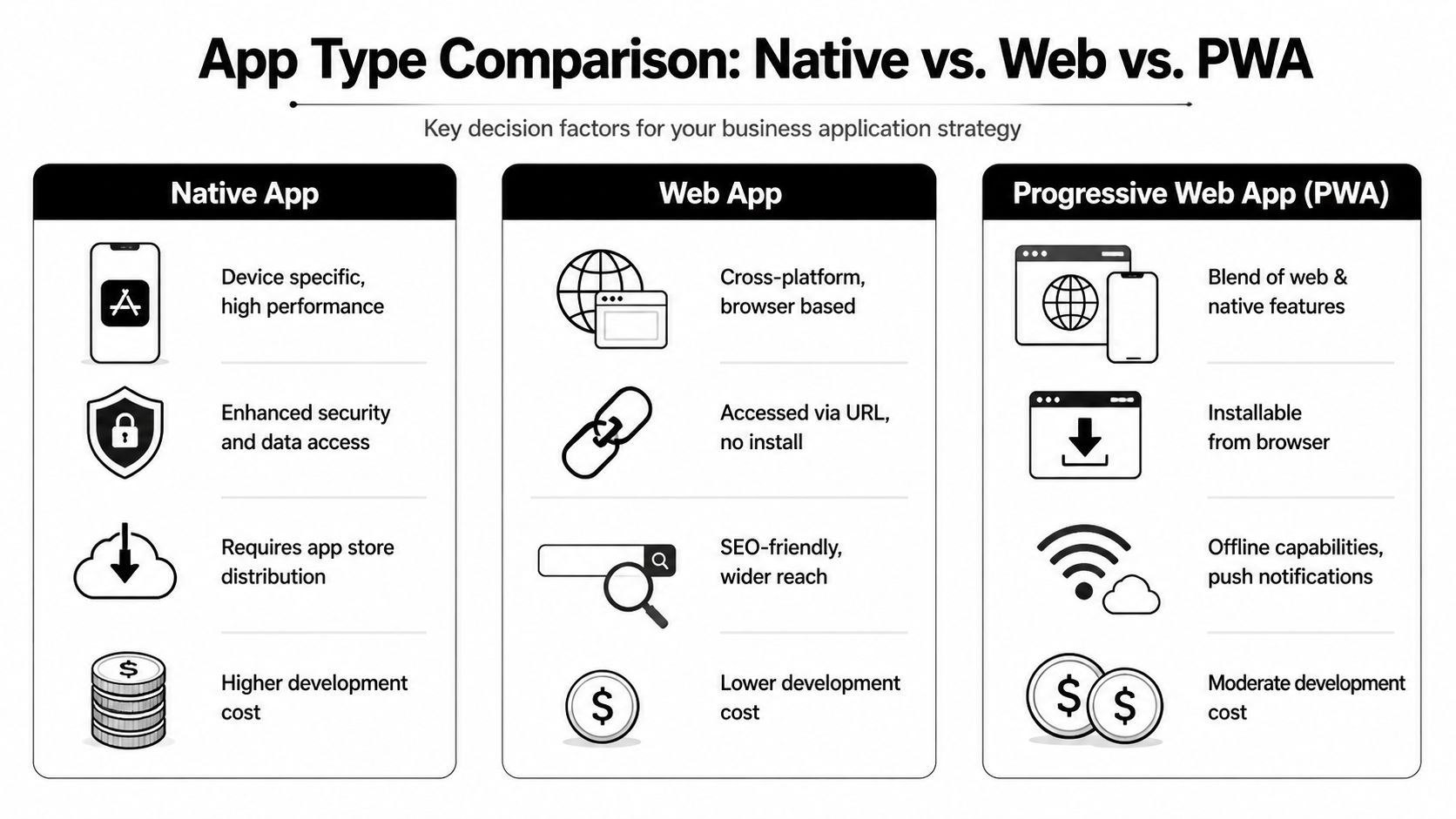
| Factor | Native App | Web App | Progressive Web App (PWA) |
|---|---|---|---|
| Performance | Best fit for high responsiveness and complex interactions | Good for standard tasks, but browser layers can add friction | Better than a basic mobile site in some cases, but still web-based |
| User experience | Strongest platform-specific feel and polish | Familiar and accessible, but less immersive | More app-like than web, with some convenience benefits |
| Device features | Best access to phone capabilities such as camera and GPS | More limited through browser environment | Better than standard web in some cases, but not equal to native |
| Discoverability | Harder to discover because install is required | Easiest to find through search and links | Better search visibility than native, with some app-like retention potential |
| Distribution | App stores | Browser and URL | Browser, with possible home-screen install |
| Best fit | Loyalty, repeat use, feature-rich tools | Discovery, lead generation, simple transactions | Hybrid goals, repeat access without full native investment |
Performance and speed
Performance is where native apps pull ahead most clearly.
A 2023 study on native versus web app performance found that native apps are significantly more efficient, consuming less energy, CPU, and memory than web apps. The same study concluded that native apps require fewer hardware resources and advised users to choose native apps over web apps when possible for a better experience.
For a business owner, that means native usually feels faster during repeated use. It also matters more when customers spend longer sessions inside the product.
Native is usually the safer choice when lag, battery drain, or heavy phone resource use would hurt the experience.
Web apps can still perform well, especially for simpler journeys like menus, scheduling forms, quote requests, and account logins. But once the experience gets more interactive, browser overhead starts to matter.
User experience and customer expectations
A user's expectations change based on how they entered.
If they tap a Google result, they expect speed and clarity. If they install an app, they expect fluid navigation, clean transitions, saved preferences, and fewer repeated steps. That's why native often works best for customers who come back frequently.
PWAs can narrow that gap for some businesses. They can feel cleaner than a normal mobile site and reduce some of the friction between first visit and repeat use. They don't fully replace a strong native experience, but they often improve the middle ground.
Access to device features
What matters more than buzzwords is the business use case.
If your app needs strong use of the camera, location, motion sensors, or richer phone integrations, native is usually the cleanest route. That's one reason it stays popular for feature-heavy products and utility-driven tools.
A contractor app that needs detailed photo uploads can often work on the web, but if you need a consistently smooth experience tied to phone hardware, native wins more often. The same logic applies to check-in flows, service tracking, and member tools.
Discoverability and SEO
For local businesses, this point often gets ignored until too late.
A web app can be found through search. A native app generally can't play the same role in local discovery. If someone in Baltimore searches for a lunch spot, med spa, or repair service, the browser-based experience carries more of the acquisition load.
That's why many businesses should treat the website or web app as the front door and the native app as the loyalty engine. Your search visibility still depends on a technically healthy site, and Core Web Vitals for mobile performance remain part of that picture.
A quick decision lens
Use this if you're still deciding:
- Choose native when repeat use, speed, richer features, and account-based retention matter most.
- Choose web when search visibility, easy sharing, and low-friction access matter most.
- Choose PWA when you want broader reach than native with more convenience than a standard website.
Analyzing the Costs and ROI for Your Business
App decisions usually look expensive at the start because owners focus on build cost first. That's understandable, but it leaves out the bigger issue. What does the mobile experience produce after launch?

Upfront cost is only part of the picture
A native app usually costs more to design, build, test, and maintain than a web app. You also have app store submission, device-specific QA, and update management to factor in. A web app is often leaner to launch and easier to update because users just visit the latest version in the browser.
A PWA often lands in the middle. It can deliver more than a standard mobile website without requiring the full overhead of a native product.
That doesn't mean the cheapest route is the smartest one. It means the right route depends on how mobile drives revenue in your business.
Where ROI can justify a bigger investment
If mobile is your primary sales or retention channel, native can justify its cost faster than many owners expect.
According to mobile app vs mobile website conversion data, mobile apps convert users at approximately 3 times the rate of mobile websites. The same source reports that app users view 286% more products per session and spend 201.8 minutes per month shopping in apps compared to 10.9 minutes per month on mobile websites.
For a Maryland retailer, specialty food brand, or repeat-order business, that gap matters. If customers browse often, save favorites, reorder, respond to notifications, and come back without searching again, the app can become a retention system, not just a mobile interface.
If your business earns money from repeat behavior, measure ROI against retention, reorder frequency, and customer lifetime value, not just launch cost.
A clear ROI model also helps when you're reviewing budgets and priorities. This breakdown of how to calculate marketing ROI is useful if you need a practical framework before approving a mobile build.
A short explainer can help if you're comparing the financial side internally:
What tends to work and what doesn't
A native app works when customers already have a reason to keep you on their phone. It struggles when the business doesn't yet have regular repeat engagement.
A web app works when first-touch acquisition matters, especially from Google, email, QR codes, and social. It struggles when you expect it to behave like a fully integrated mobile product.
A PWA works when you want a bridge between acquisition and repeat use. It struggles when the business case depends on top-tier device integration or a highly polished platform-specific feel.
App Strategies for Baltimore and Maryland Communities
The best mobile choice becomes obvious when you tie it to real neighborhood behavior.
A business in Fells Point deals with tourists, weekend foot traffic, and people making fast decisions on the sidewalk. A business in Towson often serves students, faculty, local residents, and commuters who respond well to convenience and repeat offers. A business in Canton may depend on routine, local loyalty, and a customer base that uses mobile tools as part of daily habits.
Fells Point retail and hospitality
For a Fells Point boutique, gift shop, or specialty food concept, a PWA often makes sense.
Visitors may discover the business through Google, Instagram, or a QR code in the window. They may not want to download an app for a one-time visit, but they will use a mobile experience that loads quickly, shows products, lists hours, and saves easily to the home screen. A PWA can support location-aware offers, event pages, or a simple repeat-visit incentive without demanding an install.
For a bar or restaurant in the same area, the same logic applies if walk-in discovery drives business. Search and easy sharing matter more than deep native functionality.
Towson restaurants and student-focused brands
Towson is different because repeat behavior is stronger.
A restaurant, coffee brand, or quick-service concept near campus may benefit from a native app if mobile ordering, loyalty, and push-based promotions are central to revenue. Students and regulars are much more willing to keep an app if it saves time and rewards repeat use.
That setup also helps businesses that run rotating specials or account-based perks. Customers don't need to search every time. They tap, order, and move on.
In high-repeat neighborhoods, convenience often beats discoverability after the first visit.
Canton fitness and membership businesses
For a fitness studio, training business, or wellness brand in Canton, native becomes even more attractive.
According to this overview of native and web app performance differences, native apps run directly on the device's operating system and can use platform-specific APIs and GPU acceleration, which supports faster load times and smoother animations. That makes native a strong fit for graphics-intensive or real-time experiences such as fitness tracking or tools that need quick, polished interactions.
A studio that offers class booking, account management, progress tracking, or video-based instruction usually benefits from that kind of environment. Members come back often. The app becomes part of the service.
Service businesses across Baltimore County
Not every Maryland business needs native.
A plumber in Dundalk, a law office in Essex, or a home remodeling company serving Baltimore County often gets more value from a strong web app or mobile-first website. These businesses depend heavily on search, fast contact options, form completions, and trust signals. The mobile experience needs to help a prospect call, request service, upload a few details, and move forward.
If your customer probably won't use you every week, a web-first strategy is often the smarter investment. Businesses wanting stronger local acquisition should focus first on search visibility, reviews, landing pages, and neighborhood relevance. That's also where a team with experience in Baltimore SEO strategy for local businesses can help sharpen the acquisition side before you invest in a deeper app build.
Choosing Your Path A Checklist for Maryland Businesses
You don't need a long technical brief to make a smart decision. You need honest answers to a few operational questions.
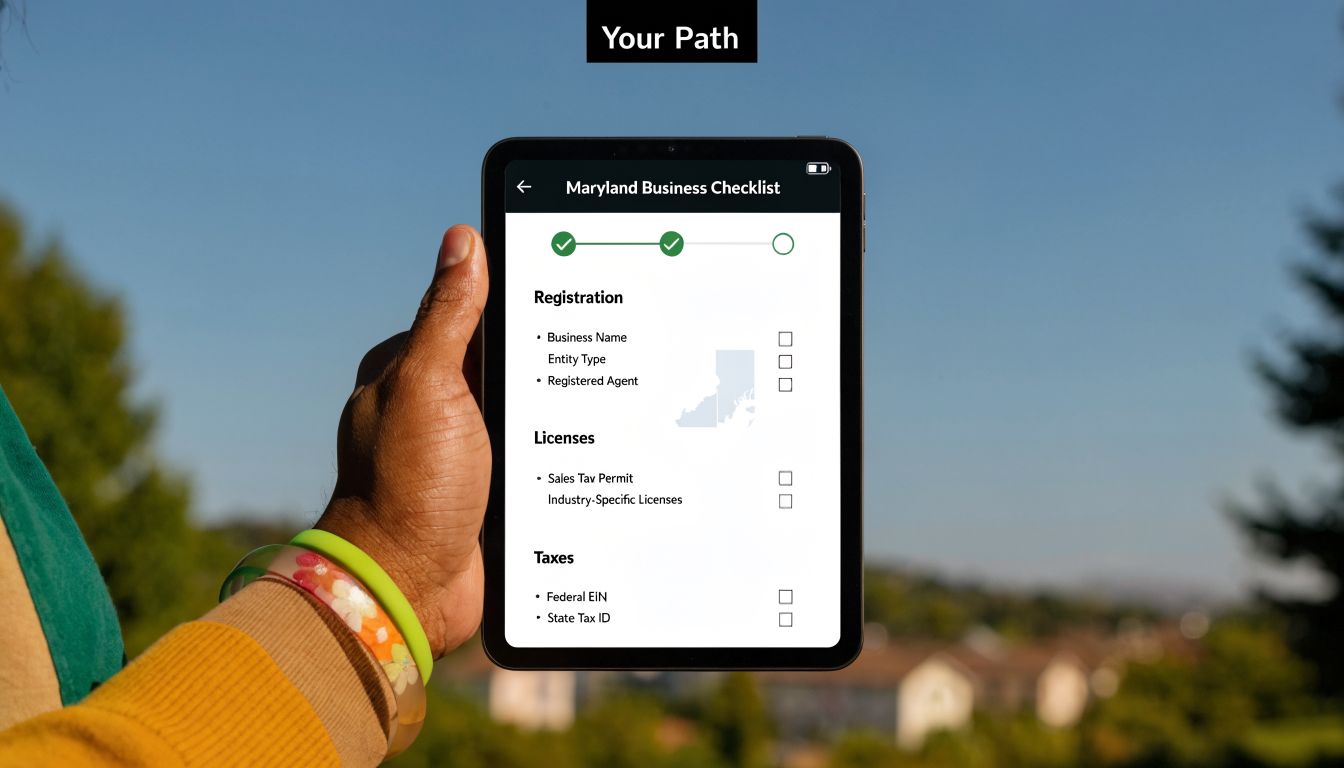
Use this checklist before you commit
- How do customers find you first? If most first visits start with Google, maps, social, or shared links, web usually deserves priority.
- How often does the same customer return? If repeat use is frequent, native becomes easier to justify.
- Does the mobile experience need phone features? Camera, GPS, saved preferences, or richer interactive tools often push the decision toward native.
- Would push messaging change customer behavior? If reminders, specials, or loyalty prompts matter, app-based retention may be worth the effort.
- Is speed under repeated use a business issue? If lag would frustrate members, shoppers, or subscribers, don't ignore the performance difference.
- Do you need broad reach with lower friction? That's where a web app or PWA usually earns its place.
- Can you maintain it after launch? Apps need ongoing updates, support, and strategic oversight. A good idea with no maintenance plan turns into shelfware fast.
The simplest way to frame the decision
Choose web if reach and search matter most.
Choose native if retention, richer features, and repeat sessions matter most.
Choose PWA if you need a practical middle path.
Most businesses don't need more options. They need fewer wrong assumptions.
Common Questions About App Development
Can I start with a web app and move to native later
Yes, and many businesses should. That's often the most practical route when you need to validate demand, improve local discovery, and learn how customers use the mobile experience before committing to a native build.
Is getting into the app stores a simple process
Not always. App store submission adds review requirements, listing preparation, and release management. It isn't impossible, but it does add operational steps that a web app doesn't have.
Do I need a separate marketing plan for an app
Yes. A good app without a rollout plan usually underperforms. You still need landing pages, email promotion, in-store signage, QR codes, customer onboarding, and a reason for people to install or return.
Will a PWA replace a native app completely
Sometimes, but not always. A PWA can be a strong answer for businesses that need accessibility and repeat convenience without full native complexity. It usually isn't the best fit when the product depends on richer device integration or a highly polished feature-heavy experience.
What's the biggest mistake small businesses make
They build for novelty instead of workflow. If the mobile product doesn't remove friction for the customer or save time for staff, it becomes one more digital property to maintain instead of a growth asset.
If you're weighing a native app vs web app decision and want a practical second opinion, Raven SEO can help you evaluate the best path for visibility, conversion, and long-term growth. A no-obligation consultation can clarify whether your Maryland business needs a native app, a web-first experience, or a more efficient hybrid strategy.