
Starting an ecommerce business is a journey of making smart, informed decisions right from the beginning. It starts with the foundational work: finding a profitable corner of the market you can serve, choosing the right business model (like dropshipping or creating your own brand), and then building a brand that truly connects with a specific group of people. Getting these first steps right sets the stage for everything that follows.
Finding a Niche You Can Actually Win
Every successful online store begins with an idea, but the first real step isn’t just about finding a cool product. It’s about identifying a market you can serve better than anyone else. This isn’t a magical “aha!” moment; it’s the result of methodical research and genuinely listening to what potential customers are asking for.
A common mistake for beginners is casting the net too wide. Instead of “selling coffee,” think “organic, single-origin espresso beans for home baristas.” Don’t aim for “women’s fashion.” Zero in on “sustainable, minimalist workwear for female entrepreneurs.” A tight focus allows you to become the go-to expert for a passionate, dedicated audience.
Uncovering Profitable Niche Ideas
Your hunt for a winning niche should be driven by data, not just a gut feeling. You can use free tools to validate your ideas and spot trends before they become oversaturated.
- Look at Search Trends: Tools like Google Trends are invaluable for low-budget market research. They show you public interest in a topic over time, helping you distinguish a fleeting fad from a market with real staying power.
- Listen to Social Chatter: Dive into Reddit forums, Facebook groups, and TikTok comments related to your passions. What problems are people constantly complaining about? What products do they wish existed? These conversations are a treasure map leading to unmet needs.
- Find the Gaps in the Competition: To truly stand out, you must know your competitors inside and out. Using competitor AI analysis tools can give you a significant advantage, revealing market gaps and opportunities your rivals have completely missed.
For example, a quick search on Google Trends for “sustainable pet food” shows a steady, growing demand.

This is precisely what you want to see—a healthy, long-term trend, not a short-lived craze. It’s a much safer foundation for a new business.
Building Your Ideal Customer Persona
Once you have a promising niche, you need to understand the people you’ll be selling to. This is where you create a detailed buyer persona. Go beyond basic demographics and delve into psychographics—their values, their biggest challenges, and what truly motivates them to make a purchase. Our guide on how to create buyer personas can walk you through this essential exercise.
A strong persona isn’t just a document you file away; it’s the filter for every single decision you make. It shapes your product development, your marketing copy, and your brand’s voice, ensuring you’re always speaking directly to the people most likely to become your best customers.
Matching a Business Model to Your Goals
Finally, you need to choose an ecommerce model that fits your budget and risk tolerance. Each one has its own set of advantages and disadvantages.
- Dropshipping: This has a very low startup cost because you don’t hold any inventory yourself. You partner with a supplier who ships products directly to your customers when an order is placed. The downside? Thinner profit margins and less control over product quality and shipping speed.
- Private Label: Here, you find a manufacturer to produce an existing product that you can sell under your own brand. This gives you much better margins and full control over your brand, but it requires a significant upfront investment in inventory.
- Direct-to-Consumer (D2C): This is where you design, manufacture, and sell your own unique product from scratch. This model offers the most control and the highest potential profit, but it also comes with the most risk and the largest initial cost.
There’s no denying the explosive growth of online shopping. By 2025, the global ecommerce market is expected to reach a staggering $6.86 trillion, with around 2.77 billion people shopping online worldwide. This massive market is full of incredible opportunities for anyone who begins with a smart, well-researched plan.
Choosing Your Tech Stack and Sourcing Products
Alright, you’ve pinpointed a promising niche. Now comes the exciting part: building the machine that will run your business. The technology you choose and the partners you select to source your products are foundational decisions. They will shape your daily operations and, more importantly, your ability to grow.
Don’t get bogged down trying to find the one “perfect” solution. The goal here is to match the tools to your specific situation—your budget, your technical comfort level, and your vision for the business in the next one to two years.
Selecting the Right Ecommerce Platform
Think of your ecommerce platform as your digital storefront. It’s where customers will browse, add items to their cart, and ultimately make a purchase. The options can seem endless, but for most new entrepreneurs, the choice typically comes down to a few major players.
The main platforms you’ll encounter are Shopify, WooCommerce, and BigCommerce. Each is designed for a slightly different type of business owner.
Here’s a head-to-head comparison of the big three for a new business, helping you see beyond the marketing hype and focus on what truly matters at the start.
Ecommerce Platform Comparison for New Businesses
| Feature | Shopify | WooCommerce | BigCommerce |
|---|---|---|---|
| Ease of Use | Excellent. The most beginner-friendly, with a guided setup process. | Moderate. Requires WordPress knowledge. Steeper learning curve. | Very Good. User-friendly dashboard, slightly more complex than Shopify. |
| Pricing Model | Monthly subscription fee. Transaction fees apply unless using Shopify Payments. | Free plugin. You pay for hosting, domain, security, and premium extensions. | Monthly subscription fee. No transaction fees on any plan. |
| Customization | Good. Uses a proprietary theme system (Liquid). App store for extensions. | Excellent. Near-limitless customization with access to thousands of WordPress plugins. | Very Good. More built-in features, reducing the need for paid apps. |
| Best For | Beginners, dropshippers, and anyone prioritizing speed and simplicity. | Entrepreneurs who want total control and are comfortable with WordPress. | Growing businesses that need robust built-in features without extra app costs. |
Choosing the right platform really depends on your personal strengths and priorities.
- If you’re not tech-savvy and just want to start selling quickly, Shopify is your safest bet. It’s an all-in-one package that handles the technical headaches for you.
- If you enjoy tinkering and want complete control over every pixel and function—and you don’t mind managing your own hosting and security—WooCommerce on WordPress is unbeatable.
- BigCommerce is a fantastic middle ground. It offers more advanced features out of the box than Shopify, which can save you money on apps as your business scales.
Your platform is a core piece of your business infrastructure. While you can always switch later, migrating an online store is a major undertaking. Try to choose a solution that not only works for you today but also has the power to support your vision for the next couple of years.
Once you’ve settled on a platform, it’s a great idea to run some basic health checks to ensure your new digital home is set up for success from day one. To help with that, check out our guide on the 5 essential technical checks for a new website.
Finding Reliable Product Sourcing Partners
Your products are what customers actually buy, so the quality of your suppliers is directly linked to your reputation and customer satisfaction. The method for finding these partners will depend entirely on the business model you’ve chosen.
For Dropshippers
If you’re dropshipping, your job is to be an expert curator and marketer, which means your supplier’s reliability is everything. You need partners who ship on time and communicate clearly.
Instead of taking a chance on a random supplier, consider using a directory like SaleHoo or Spocket. These platforms pre-vet their suppliers, which dramatically reduces your risk and saves you a ton of research time. Before you commit, send a test email to a potential partner. See how quickly they respond. Their customer service is your customer service.
For Private Label Brands
For those building a private label brand, your journey will likely begin on a massive marketplace like Alibaba. This requires a bit more detective work.
Don’t just look at the product photos. Dig into the supplier’s profile. Look for a “Gold Supplier” badge and check how many years they’ve been in business—longevity is a good sign. The most critical step? Always order samples. Get physical products from your top 3-5 contenders so you can feel the quality for yourself before placing a five-figure order.
For Unique & Handcrafted Goods
Finally, don’t get so focused on overseas manufacturing that you miss opportunities in your own backyard. Sourcing from local artisans or attending trade shows can provide you with a truly unique inventory that can’t be found on Amazon.
This approach is perfect for building a brand with a powerful story rooted in craftsmanship and community. These relationships can also lead to exclusive products and collaborations that will set you miles apart from the competition.
Building Your Digital Storefront and Getting Your Finances in Order
You’ve selected a platform and sourced your products. Now for the exciting part: building the actual place where people will shop. This is where your brand transforms from an idea into a real, interactive storefront. At the same time, we need to handle the less glamorous—but absolutely critical—legal and financial groundwork that keeps you protected and lets you get paid.
It’s easy to get caught up in product photos and website colors, but what truly matters is creating a user experience (UX) that just works. If your store is confusing, slow, or feels untrustworthy, shoppers will leave without a second thought. The goal is simple: make the journey from casual visitor to happy customer as smooth as possible.
Designing a Storefront That Actually Converts
Your store’s design isn’t just about aesthetics; it’s a sales tool. Every element, from your navigation bar to your product descriptions, has a job to do: build trust and make it incredibly easy for people to buy from you.
- Make Navigation a No-Brainer: Your main menu should be simple and predictable. Use clear, common-sense categories like “Shop,” “New Arrivals,” or specific product types. A shopper should be able to find what they’re looking for in three clicks or less. Anything more tests their patience.
- Write Product Descriptions That Sell: Don’t just list specs and features. Tell a story. Explain how your product solves a problem or improves someone’s life. Use short, scannable paragraphs and bullet points to highlight the most important benefits.
- Get Your Product Photography Right: You don’t need a professional studio to start. Today’s smartphones can take amazing photos. The key is good lighting—natural light from a window is your best friend. Use a clean, uncluttered background and be sure to show your product from multiple angles.
Think of your storefront as your best salesperson. It works 24/7, never calls in sick, and its sole purpose is to communicate your brand’s value and turn browsers into buyers.
Setting Up Your Business Structure and Finances
Before you process a single order, you need to get your house in order. Taking care of the legal and financial aspects now will save you from major headaches later. This means choosing a legal structure, getting the right permits, and—most importantly—keeping your business and personal finances completely separate.
First, you need to decide on a legal structure for your business.
- Sole Proprietorship: This is the default and simplest option. You and your business are considered one and the same, which is easy but offers zero personal liability protection. If the business is sued, your personal assets are at risk.
- Limited Liability Company (LLC): This is the preferred choice for most new ecommerce owners. An LLC creates a legal barrier between your personal assets and your business debts, providing crucial protection without the complex paperwork of a full corporation.
Once you’ve chosen a structure, you’ll need to register your business name and check for any local or state licenses required to operate. These rules vary significantly by location, so your local small business administration office is the best place to get accurate information.
Integrating Payments and Managing Your Money
The final piece of the puzzle is getting paid. To do this, you need to set up payment gateways—the services that securely handle your customers’ credit card information.
For a new store, the easiest and most trusted options are almost always Stripe and PayPal. Millions of shoppers already know and trust them, and they integrate seamlessly with platforms like Shopify and WooCommerce. When setting them up, pay close attention to a couple of key details:
- Transaction Fees: Every gateway takes a percentage. It’s usually a small percentage plus a flat fee per transaction (a common rate is 2.9% + 30¢). This is a standard cost of doing business online, so make sure to factor it into your product pricing.
- Payout Schedules: You need to know how long it takes for money from a sale to actually arrive in your bank account. Payouts can take anywhere from a few days to a week, which directly impacts your cash flow for things like buying more inventory or running ads.
Setting up your storefront and finances properly is a huge milestone. The design choices you make will directly influence your sales, while the financial structure you build will ensure your business is stable and ready for growth. While the investment can vary, understanding the core components is crucial. For a more detailed look at what to budget, this guide on ecommerce website development costs is a great resource. Nailing these foundational steps will give your new business the professional polish and solid operational base it needs to succeed right out of the gate.
Crafting a Launch Strategy That Actually Works
A great product and a beautiful storefront are just the starting point. A successful ecommerce launch is never an accident; it’s the result of a deliberate, well-executed plan to generate your first wave of traffic, buzz, and sales. This isn’t about spending a fortune on ads from day one. It’s about making smart, coordinated moves across the channels your customers are already using.
The main goal is to build initial momentum that you can sustain and grow. This requires a two-pronged approach: laying the groundwork for long-term discovery on Google while creating immediate interest and excitement on social media.
Laying Your SEO Foundation
Search Engine Optimization (SEO) is a marathon, not a sprint, but the work you do before you launch is absolutely critical. Getting the basics right from the start ensures that search engines like Google can find, understand, and begin to trust your store from day one.
When someone eventually searches for a product you sell, you want to be there. Think of it as setting up your store in a high-traffic digital neighborhood instead of a deserted back alley.
- Product Page Keyword Research: Before writing a single product description, you need to know the exact words and phrases your ideal customers are typing into Google. Use free tools to find keywords that have decent search volume but aren’t impossible to rank for. Instead of a generic term like “skincare,” you might target a more specific, high-intent phrase like “vegan face moisturizer for sensitive skin.”
- On-Page SEO Essentials: Once you have your keywords, weave them naturally into your product titles, descriptions, and even your image alt text. This gives search engines clear signals about what each page is about, dramatically improving its chances of appearing in relevant searches.
- Set Up Google Analytics: This is non-negotiable. Installing Google Analytics before you launch allows you to track every single visitor from your very first day. You’ll see where they came from, what pages they visited, and how they behave—invaluable data for making smart decisions later on.
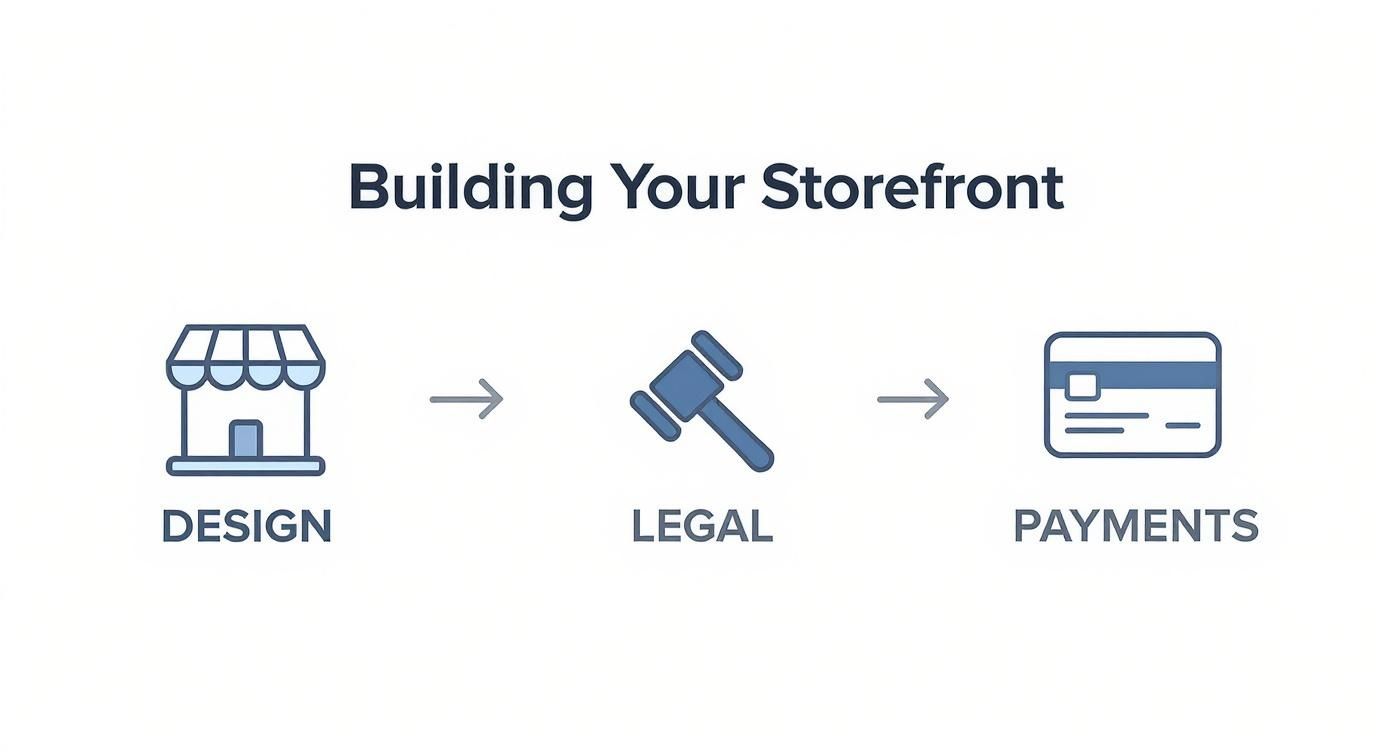
The image below shows how these core components fit together. Your launch strategy is built on the foundation of a well-designed store, sound legal footing, and seamless payment processing.
Building Pre-Launch Buzz on Social Media
While SEO is your long-term growth engine, social media is your launch day accelerator. It’s the perfect place to build an audience that is genuinely interested in your products before your store is even open.
The key is to be strategic. Don’t try to be everywhere at once. Just create business profiles on the one or two platforms where your target customers actually spend their time. Master those channels first.
A successful social media launch isn’t about shouting “We’re open!” into the void. It’s about building a small, engaged community of people who are genuinely excited for what you’re about to offer.
Start posting content two to four weeks before your official launch. Share behind-the-scenes glimpses of your products, tell the story of why you started the brand, and run polls to get feedback on things like packaging or color options. This builds anticipation and makes your first followers feel like they’re part of the journey.
Integrating Social Commerce for Seamless Sales
The lines between social media and shopping have completely blurred, and that’s a massive opportunity. Social commerce is booming, with sales expected to hit $1.17 trillion globally by 2025. Platforms like Instagram, Facebook, and TikTok are now major sales channels, not just marketing tools.
This trend is especially true for younger shoppers, with over 85% of global consumers aged 18-34 making purchases directly through social media. At the same time, mobile commerce has taken over, projected to account for 59% of all online retail sales in 2025.
To take advantage of this, set up features like Instagram Shopping or Facebook Shops right away. These tools let customers browse and buy your products directly within the app, which dramatically reduces friction. A clunky checkout process is a conversion killer; a seamless one is crucial, especially on mobile. If you want to dive deeper, you can learn more about how to reduce cart abandonment in our in-depth guide.
By pairing foundational SEO with a targeted social media push, you create a launch strategy that delivers both immediate impact and sustainable, long-term growth. This ensures you’re not just launching a store, but launching a brand that has momentum from day one.
Using Data to Drive Growth After Launch
Your launch day isn’t the finish line; it’s the starting gun. Many entrepreneurs breathe a sigh of relief once their store is live, but the real work has just begun. Long-term success in ecommerce comes from creating a feedback loop where you listen to your data, understand what it’s telling you, and make smart, calculated adjustments.
The numbers your store generates are more than just a report card—they’re a roadmap. They show you exactly what’s working and, more importantly, where the friction points are in your customer’s journey. Your job is to translate those numbers into action.
Identifying the Metrics That Matter
When you first open your analytics dashboard, it’s easy to get overwhelmed. To avoid analysis paralysis, zero in on a few Key Performance Indicators (KPIs) that give you the clearest picture of your store’s health.
- Conversion Rate: This is the big one. It’s the percentage of visitors who make a purchase. Think of it as the ultimate measure of how well your store turns browsers into buyers.
- Average Order Value (AOV): This metric tells you how much a customer spends, on average, in a single transaction. Increasing your AOV is one of the fastest ways to boost revenue without needing more traffic.
- Customer Lifetime Value (CLV): CLV predicts the total revenue you can expect from a single customer over their entire relationship with your brand. It’s a vital number for making smart decisions about marketing spend and customer retention.
Watching these numbers closely gives you a pulse on your business. You’ll also want to keep an eye on user engagement metrics like bounce rate and cart abandonment. The shopping cart abandonment rate is a notoriously painful one for new store owners; studies show the average is around 70%. That means for every ten shoppers who add an item to their cart, seven leave without buying.
Here’s a glimpse of what an analytics dashboard might look like, giving you a quick visual rundown of your key metrics.
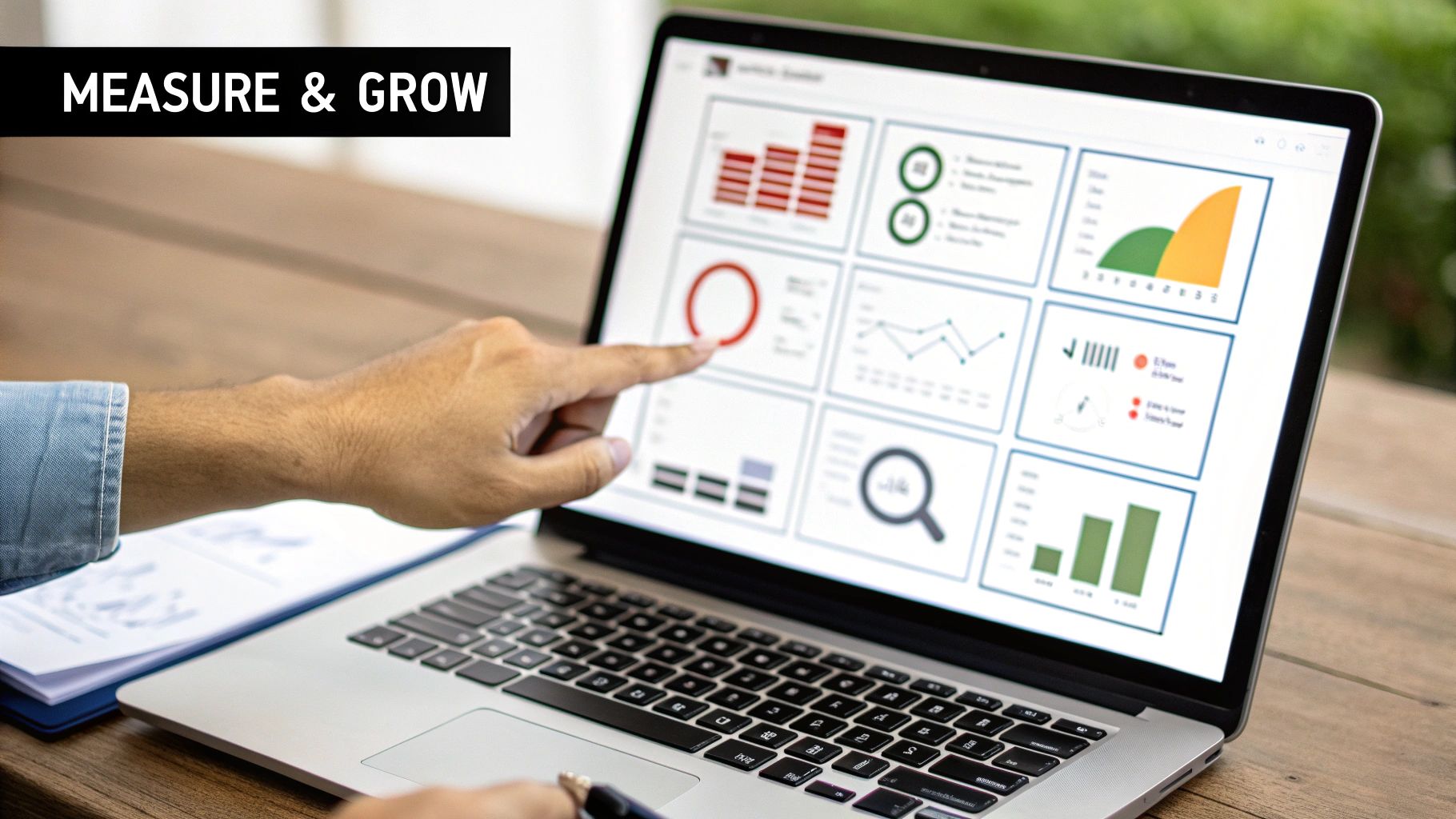
This kind of visual data helps you quickly spot trends, like a sudden drop in sales or an increase in new users from a specific marketing campaign.
Turning Insights into Action
Data is useless if you don’t act on it. Once you’ve identified a problem area, the next step is to form a hypothesis and test a solution. This is the heart of Conversion Rate Optimization (CRO)—a methodical process of improving your site to get more visitors to take the action you want them to take.
Let’s say your data shows a high cart abandonment rate. This tells you people like your products enough to add them to the cart, but something in the checkout process is stopping them.
Your data doesn’t just tell you what is happening; it gives you clues about why it’s happening. A high cart abandonment rate might point to surprise shipping costs, a confusing form, or a lack of trusted payment options.
To figure out the real problem, you can start A/B testing changes. This simply means showing two different versions of a page to different visitors to see which one performs better.
- Test your product titles: Does a more descriptive title lead to more add-to-carts?
- Experiment with button colors: Does a green “Buy Now” button convert better than a blue one?
- Simplify your checkout form: Would removing one unnecessary field reduce friction and push more people over the finish line?
Each test gives you a clear winner, letting you make small, data-backed improvements that add up over time. To get the most out of this process, you need to be comfortable with your analytics platform. To dive deeper, check out our guide on understanding Google Analytics 4 key reports for data-driven insights.
By adopting this data-first mindset, you move from guessing what your customers want to knowing what they need, building a stronger, more profitable business with every decision.
Common Questions About Starting an Ecommerce Business
Kicking off an ecommerce venture always brings up a few common questions. Getting clear answers to these early hurdles is often the key to moving forward with confidence and finally turning that great idea into a real, functioning online store. Let’s tackle some of the most frequent queries we hear from first-time entrepreneurs.
How Much Money Do I Need to Start an Ecommerce Business?
This is a major question, and the honest answer is: it’s incredibly flexible. Your startup costs depend almost entirely on your business model.
You could genuinely launch a dropshipping store for under $100. That would cover a basic Shopify plan (around $29/month) and a domain name (about $15/year). The real variable, the one that can significantly increase costs, is inventory.
If you’re creating your own private label brand, your biggest upfront expense will be buying your first round of stock. To keep your initial investment lean, it’s smart to consider models that don’t require you to hold inventory yourself.
- Dropshipping: You find a supplier who ships products directly to your customers. You never touch the inventory, so you have zero upfront stock costs.
- Print-on-demand: You sell custom-designed items like t-shirts, mugs, or posters. The products are only printed and shipped after a customer places an order.
What Are the Most Profitable Ecommerce Niches?
There’s no secret list of guaranteed money-makers. Real success comes from smart positioning and execution, not just picking the “right” category. That said, some areas consistently show strong, lasting demand.
Evergreen markets like health and wellness, pet supplies, and eco-friendly products are always active. The trick isn’t to just jump in, but to drill down into a specific sub-niche. Instead of trying to compete in the massive “pet supplies” ocean, you could specialize in “orthopedic beds for senior dogs” and become the go-to brand for that very specific, passionate audience.
The most profitable path isn’t finding some secret, untouched market. It’s about finding a passionate audience within a larger market and serving their specific needs better than anyone else.
Do I Need to Legally Register My Ecommerce Business Right Away?
Yes. It is highly recommended to formalize your business structure before you make your first sale. Choosing a structure like a Sole Proprietorship or, more commonly, a Limited Liability Company (LLC) is a critical first step.
An LLC is popular for a reason: it creates a legal wall between your personal assets and your business liabilities. This means if your business runs into debt or legal trouble, your personal savings, home, and car are protected.
You’ll also need that formal business registration to open a dedicated business bank account. This is essential for managing your finances properly and will make tax season infinitely less stressful. Requirements vary by state and city, so be sure to consult your local business authority to get everything squared away from day one.
Ready to build an ecommerce business that gets found by the right customers? The team at Raven SEO specializes in creating data-informed SEO and digital marketing strategies that drive visibility, traffic, and sales for online stores. Learn more about our eCommerce SEO services.